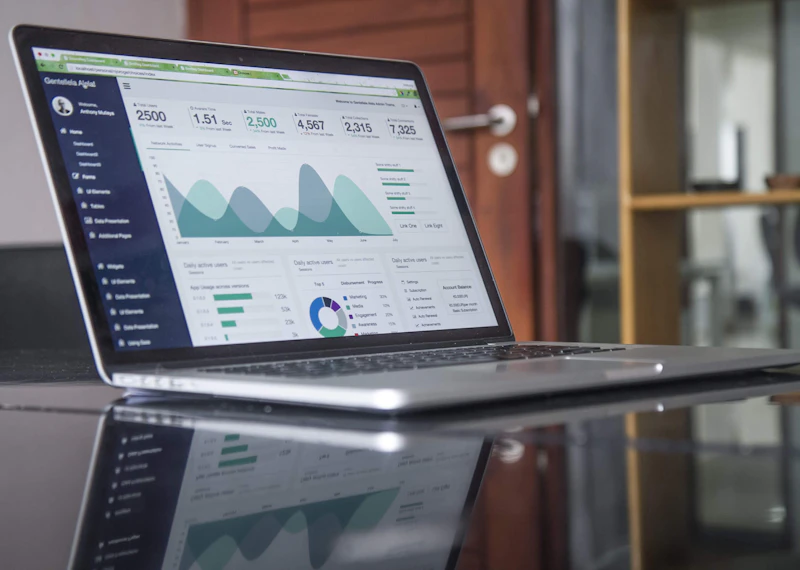
Batch processing is obsolete for operational intelligence. When your fraud detection dashboard updates once per day, you have already lost millions. Modern businesses require sub second insights to respond to opportunities and threats in real time. Building real time analytics requires rethinking your entire data architecture, and the combination of Apache Kafka and ClickHouse provides the most powerful foundation available.
Why Traditional Databases Fail for Real Time Analytics
Traditional relational databases like PostgreSQL or MySQL were designed for transactional workloads, not analytical queries. They excel at updating individual records but struggle with analytical queries scanning millions of rows. Once your tables grow beyond a few million rows, analytical queries slow to a crawl, impacting both analytics and transactional performance.
Traditional data warehouses like Snowflake or Redshift are optimized for analytical queries but have latency measured in seconds or minutes. They batch ingest data, run queries across massive datasets, and return results. This is perfect for business intelligence and historical analysis but inadequate for operational dashboards that need to reflect current state.
At Futureaiit, we have built real time analytics systems processing billions of events daily with end to end latency under two seconds. This guide explains the architecture patterns that make this possible.
Understanding ClickHouse: The Real Time OLAP Database
ClickHouse is an open source columnar database management system designed specifically for online analytical processing. Unlike row oriented databases that store data by record, ClickHouse stores data by column. This architecture provides dramatic performance advantages for analytical queries.
Columnar Storage Advantages
When you query for average order value across millions of transactions, you only need the order value column. A row oriented database must read entire rows, including customer names, addresses, and other irrelevant data. ClickHouse reads only the specific columns needed, reducing I/O by orders of magnitude.
Columnar storage also enables superior compression. Data in a single column tends to be similar, allowing compression algorithms to achieve ratios of 10x to 100x. This means more data fits in memory, further accelerating queries.
Massive Ingestion Throughput
ClickHouse can ingest millions of rows per second on modest hardware. It achieves this through batch inserts, where multiple rows are written together, and through its MergeTree storage engine, which continuously merges small data parts into larger, optimized structures in the background.
Futureaiit has deployed ClickHouse clusters ingesting over 100,000 events per second sustained, with burst capacity exceeding 500,000 events per second. This throughput is sufficient for even the most demanding real time analytics applications.
Apache Kafka: The Event Streaming Backbone
Kafka is a distributed event streaming platform that acts as the central nervous system of real time data architectures. Applications publish events to Kafka topics, and consumers read those events to process, transform, or store them.
Why Kafka is Essential
Kafka provides durability and replayability. Events are persisted to disk and retained for a configurable period, allowing you to replay historical events if needed. This is critical for recovering from failures or reprocessing data with new logic.
Kafka decouples producers from consumers. Applications publish events without knowing or caring what systems consume them. This allows you to add new consumers (analytics systems, machine learning pipelines, audit logs) without modifying producers.
Kafka scales horizontally by partitioning topics across multiple brokers. Each partition can be consumed independently, allowing parallel processing that scales with your data volume.
The Reference Architecture
The architecture Futureaiit implements for real time analytics follows a proven pattern that balances performance, reliability, and operational simplicity.
Event Production
Applications emit events to Kafka topics as business activities occur. User clicks, transactions, sensor readings, log entries, and any other time series data become Kafka events. Use a schema registry like Confluent Schema Registry to enforce event structure and enable schema evolution.
Stream Processing
For simple use cases, ClickHouse can consume directly from Kafka using the Kafka table engine. For complex transformations, enrichment, or aggregations, insert a stream processing layer using Kafka Streams, Flink, or Spark Structured Streaming. This layer reads from Kafka, transforms events, and writes results back to Kafka topics that ClickHouse consumes.
ClickHouse Ingestion
ClickHouse's Kafka table engine reads events from Kafka topics and writes them to ClickHouse tables. Configure the engine to batch events for optimal ingestion performance. Use materialized views to transform and aggregate data as it arrives, pre computing common queries for instant response times.
Materialized Views: The Secret Weapon
Materialized views in ClickHouse are not like traditional database materialized views. They continuously process incoming data, updating aggregations in real time. Define a materialized view that computes, for example, revenue by product category per minute, and ClickHouse updates it automatically as events arrive.
This pre aggregation is critical for dashboard performance. Instead of scanning billions of raw events to compute totals, your dashboard queries the materialized view containing pre computed aggregations. Queries that would take seconds on raw data return in milliseconds from materialized views.
Query Layer
Dashboards and applications query ClickHouse directly using its HTTP interface or native protocol. ClickHouse returns results in milliseconds, enabling truly interactive analytics. Use tools like Grafana for operational dashboards or build custom applications using ClickHouse's client libraries.
Performance Optimization Techniques
Achieving sub second query performance at scale requires careful optimization. Futureaiit has developed a comprehensive optimization methodology based on hundreds of implementations.
Table Engine Selection
Use the MergeTree family of table engines for most use cases. ReplicatedMergeTree provides replication for high availability. SummingMergeTree automatically aggregates rows with the same primary key, perfect for metrics. AggregatingMergeTree stores intermediate aggregation states, enabling efficient incremental aggregations.
Primary Key Design
ClickHouse's primary key determines data sort order and query performance. Design primary keys to match your most common query patterns. For time series data, typically include timestamp as the first key component. Add dimensions you frequently filter by as additional key components.
Partitioning Strategy
Partition tables by time (typically by day or month) to enable efficient data lifecycle management and query optimization. ClickHouse can skip entire partitions when queries filter by partition key, dramatically reducing data scanned.
Operational Considerations
Running production real time analytics systems requires robust operational practices.
Monitoring and Alerting
Monitor Kafka consumer lag to ensure ClickHouse keeps up with event production. Alert on increasing lag, which indicates ingestion bottlenecks. Monitor ClickHouse query performance, memory usage, and disk I/O to identify resource constraints before they impact users.
Capacity Planning
Plan ClickHouse cluster capacity based on data volume, query patterns, and retention requirements. Futureaiit typically recommends starting with a three node cluster for high availability and scaling horizontally as data volume grows.
How Futureaiit Builds Real Time Analytics Systems
At Futureaiit, we have built real time analytics platforms for fintech companies detecting fraud, e-commerce platforms tracking user behavior, and IoT systems monitoring millions of devices. We understand the architectural patterns, performance optimization techniques, and operational practices required for production systems.
Our team brings expertise in Kafka architecture, ClickHouse optimization, and stream processing. We can design and implement real time analytics systems that scale to billions of events while maintaining sub second query latency.
Whether you are building your first real time analytics system or scaling an existing platform, Futureaiit can help. Contact us to learn how we can help you build analytics infrastructure that provides instant insights at any scale.
Futureaiit
AI & Technology Experts